Looks like you might be in Australia
You've landed on our NZ website, click the link below to head to the Australian site, or click out of this box if you are actually in NZ!
Visit Australian SiteStay on NZ website instead

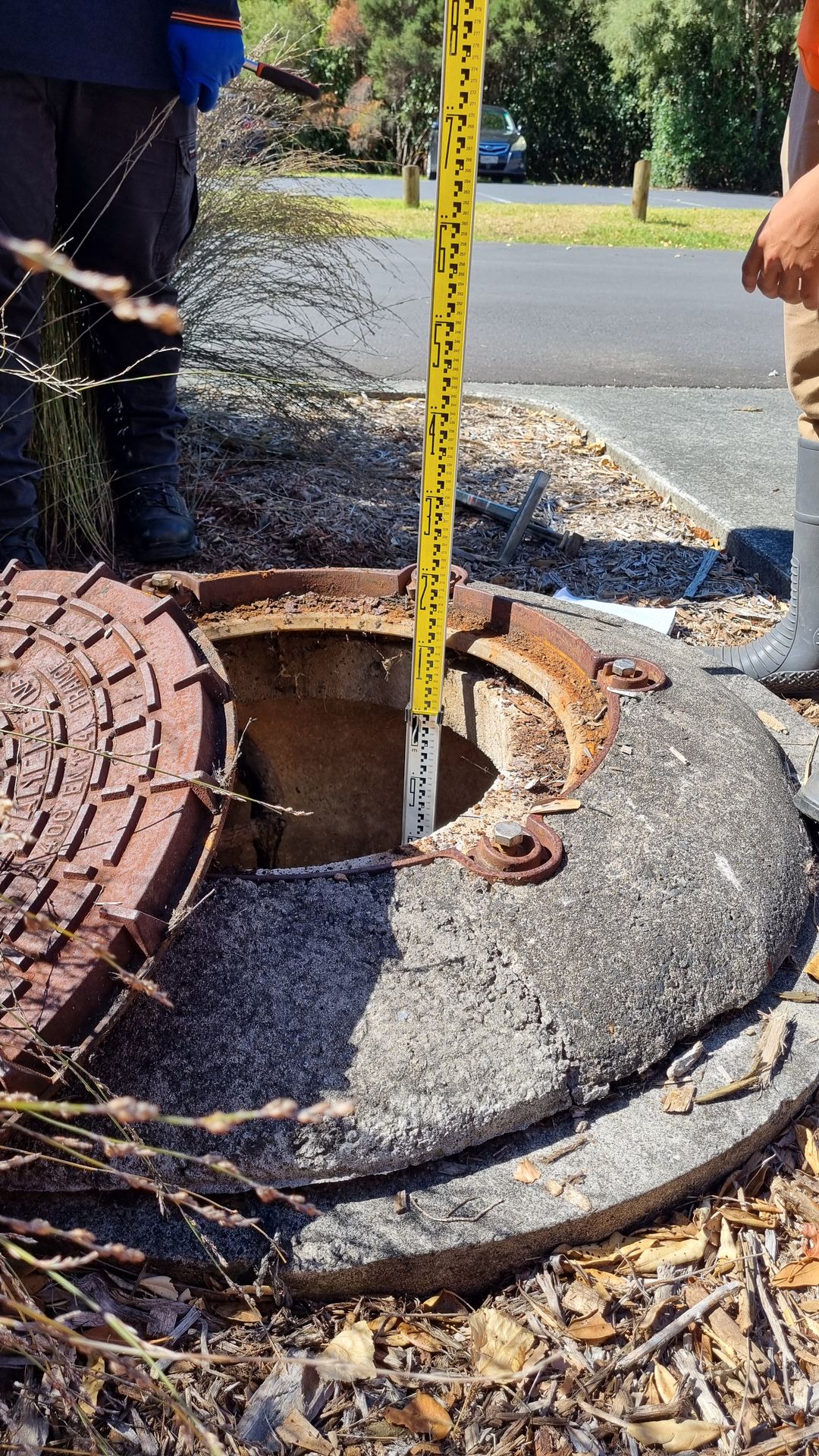
In a coastal Auckland area, an ageing wastewater rising main had begun experiencing intermittent overflows at a manhole along a main road. These events typically followed periods of heavy rainfall and, while generally contained within the road reserve, raised concerns about system performance and the potential risk to the nearby coastal environment.
Morphum’s engineering team was engaged to investigate the issue and provide a clear, practical pathway to resolve the overflows and improve the resilience of the network.
To begin, the team met with the pumpstation operators and client to see what the extent of the issue was and understand the on-site experience from the people that must react and remediate the issue. Site investigations identified additional factors affecting the system performance including signs of corrosion around pumpstation valves, an issue not initially raised but one with the potential to affect the long-term reliability.
Alongside field observations, our team undertook a detailed catchment analysis based on the houses connected to the pumpstation network, using the information to assess the pump capacity and size suitability. Combining this with a hydraulic assessment of the flow conditions that arise during active pump operation, the team could identify the root causes of the overflow issue.
In all, column separation in a section of pressure pipe in the downstream network was found to contribute to increased stress, pipe fatigue, and risk of leaking. Further, downstream disconnected pressure pipes intended to function as a gravity network were identified as an undersized bottleneck during peak flows, contributing to the observed overflows.
To address the issues, Morphum developed a set of targeted recommendations focused on immediate improvements and building long-term resilience in the network.
The network would require some retrofitting to reconnect the pressure system at the overflow location and a new air release valve would need to be installed to manage pressure fluctuations and reduce the effects of column separation.
Together, these measures provide a practical and cost-effective way to stabilise system performance, reduce the likelihood of future overflows, and extend the lifespan of existing infrastructure.
With the understanding and analysis of the wider system and context, the local community and taiao can rest assured that overflows in the area can be improved for the future.
"[The Morphum team] were great to deal with, wanted to gather as much info during the investigation including site visit and plan review. Delivered on time, team was very accommodating in waiting for info from the customer. Great communication throughout the investigation process, the recommendation seems fit for purpose and the model given has made it a bit easier to source and plan the repair."



%20(Optimised).jpg)


.jpg)